
Netflix’s Avatar: The Last Airbender is now streaming. I was nervous going into the first episode. I guess because I still feel the trauma of how the first adaptation ruined the show that I grew up fondly. But to be honest, I am not amazed, and, at the same time, I don’t hate it—it’s just an okay adaptation. It breathes a new interpretation of the series but, at the same time, respects the original material. You just might want to hold on very tightly per episode as the show takes a risk in re-introducing the show to old fans and new.

Avatar: The Last Airbender follows the story of Aang (Gordon Cormier), the avatar and the last airbender who has emerged after being frozen in ice for 100 years, learned that his people have been wiped out by the Fire Nation and is waging war on the world. With the help of his friends, Katara (Kiawentioo) and her brother Sokka (Ian Ousley), he must journey across the world to master all four elements—water, earth, fire, and air—to save the world from the threat of the Fire Nation, which has sent the exiled Prince Zuko (Dallas Liu) along with his Uncle Iroh (Paul Sun-Hyung Lee), to find him.
Although the show kicks off in an exciting way to introduce the 100-year war, it immediately took a bump by taking in heavy expositions. It made a supposedly incredible opening to some awkward moments and dialogues. There’s a reason why the animated series started with the “Boy in the Iceberg.” It wanted us to get to know Aang—from a random boy—to learning his past and eventually becoming the Avatar. The narrative shouldn’t always be explained, nor should it introduce the character of who they are and what they do. Let the story and the act take you on that journey—this is what makes the original series interesting.
The Cast Brings Life To The Story

The show’s immediate flaws may seem to go towards the 2010 live-action adaptation; it then proves why it is different. The team Avatar—Aang, Sokka, and Katara is a solid trio of young actors who faithfully capture the spirit of their animated characters while giving their own interpretations. Cormier is a well-cast to play Aang. Driven by the pressure of a past decision and the expectation as the Avatar, the actor still shows joy, hope, and kindness. A character who carries a lot of weight but is not pulled into much emotion and maintains his gentle wit as a kid. Kiawentioo’s Katara serves as the heart of the trio. Ousley’s Sokka has a good sense of humor but has some awkward moments. Liu is also well-cast as Zuko. A fiery young Fire Prince dwells on the past and shows vulnerability despite his anger and hatred. His redemption story in the animated series was one of the best ever told. Netflix gives us a taste of it in the eight-episode season and something we will look forward to if given the green light.
Other supporting cast members are also great, like Ambudkar’s Bumi, who lives for a hundred years, and the effect of the war takes a toll on his character. Paul Sun-Hyung Lee’s Iroh—plays a loving and fun Uncle but starts the series by giving immediate hints that he is the Dragon of the West. The most notable for me is Elizabeth Yu’s Princess Azula, who we see earlier in the story than in the original series. Yu’s interpretation of the character has rage and arrogance blended with her young age. Although there is much to say about the actress’s good performance, her character deviates more from the original material. I like planting the seed, giving viewers something to look forward to in the next season. But so far, her appearance in the live-action series is like a double-edged sword. It creates an opportunity—yes—but also weakens her character.
Princess Azula mainly appears in the second season of the original series. She is the main antagonist of season 2. I could consider her the villain of the entire series—next to Ozai. But we see her make a difference from season 2 until the end. We know her as the intimidating Fire Princess who converts challenging situations to her advantage. We see her confidence standing out from the rest of the Fire Nation and schemes that change the tide of the series. Adding her early to the story is not a bad decision, but involving her in the narrative is unnecessary. She doesn’t have to do anything in season 1. Let other evil characters do their thing. It only creates a convoluted feeling. Her friends, Mai and Ty Lee look weak and are only placed on the screen, so she has someone to talk to. Their introduction in the original series is something you should not skip, as it tells you more about Azula and the nature of the war. Given the show only has eight episodes to tell the story and an unsure future, the show instead invested in her already rather than developing other characters who have more impact in season 1.
Visually stunning?
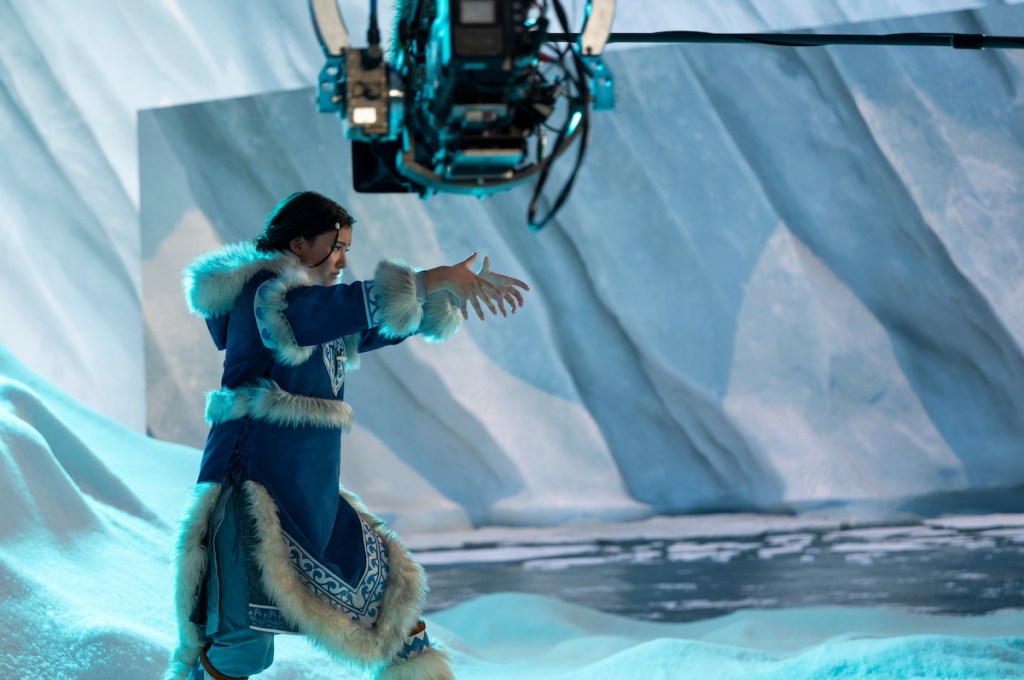
I give my respect to the visual effects team and to the rest of the production crew who are involved in the editing process. It is not an easy job—given the nature of the show and the budget it has. The visuals are stunning—especially the establishing shots on Omashu, the Water Tribe, Fire Nation, and the Southern Air Temple. However, some special effects, such as bending, feel raw. This is present in minor scenes or earlier episodes but then improves in the second half. Although it may distract some viewers, the show still excels bringing various bending into good fight sequences. Something that the first live-action adaption failed to deliver.
Is This The Live-Action Adaption We Needed Most?
The show has a lot of potential. It has great actors who bring our beloved characters to life in their own way. It is a more faithful adaptation, definitely better than M. Night Shyamalan’s The Last Airbender. The world-building, costumes, and production will amaze you. But is this the live-action adaptation that we needed most? After watching the first season, I would still watch the next one if given a chance—but I don’t think the animated series needs a live-action adaptation.
Avatar: The Last Airbender was made as an animated series, where it has different limits than a live-action series would have. It perfectly establishes timeless characters, allowing them to develop and be redeemed. The visuals, such as various bending styles and perfectly animated creatures, could create the impossible. Overall, it is a perfect series that could not be recreated, so you could leave it as it is.
Nevertheless, Netflix has kept its momentum from the One Piece Live Adaptation into this series.
Avatar: The Last Airbender is now streaming on Netflix.
3 stars out of 5
How about you? What do you think about the latest adaptation of the Avatar: The Last Airbender? Let me know your thoughts down in the comment section.
 A Whippersnapper